If you are planning a new condo project in Pittsburgh, the market is giving you clear signals. Buyers want urban convenience, smart layouts that support hybrid work, and predictable monthly costs. They also want storage, parking, and access to outdoor space. In this guide, you will see what matters most, how to prioritize your budget, and which details help your building sell faster and with fewer surprises. Let’s dive in.
Who is buying Pittsburgh condos now
Pittsburgh condo buyers include downsizing empty-nesters, young professionals in healthcare, universities, and tech, some first-time buyers, and investor or rental buyers. They are drawn to central locations and established neighborhoods like Downtown, Oakland, Lawrenceville, Shadyside, the Strip District, the South Side, and the North Shore. Affordability compared to coastal metros is a major advantage, especially when paired with walkability and access to culture and dining. You will win attention if your project balances convenience, thoughtful design, and transparent operating costs.
What motivates buyers
- Walkability and proximity to jobs, restaurants, and cultural assets.
- Low-maintenance living with reliable building services.
- Space to work from home without sacrificing living area.
- Predictable costs with clear HOA coverage.
- Parking and storage, especially for downsizers.
- Access to outdoor space, both private and shared.
Floor plans that sell
The right unit mix and circulation make a meaningful difference at pre-sale and on tours. Thoughtful layouts convert browsers into buyers and help reduce discounting later in the sales cycle.
The right unit mix
Demand is strongest for 1- and 2-bedroom homes. Studios and 3-bedroom units serve niche segments. If your target is professionals and downsizers, focus your mix accordingly, then layer in a limited number of larger or smaller plans to round out the stack.
Work-from-home flexibility
Buyers want a defined workspace, not just a laptop at the kitchen island. Include a semi-private office, a den that can close off, or a built-in nook that fits a desk and storage. The goal is to support hybrid work without shrinking the main living area.
Storage and in-unit laundry
In-unit laundry is a baseline expectation. Stackable units work in smaller homes, while full-size is preferred where possible. Add walk-in or generous bedroom closets, a coat closet or pantry near the entry, and dedicated on-site storage rooms or lockers to reduce clutter.
Light, ceilings, and views
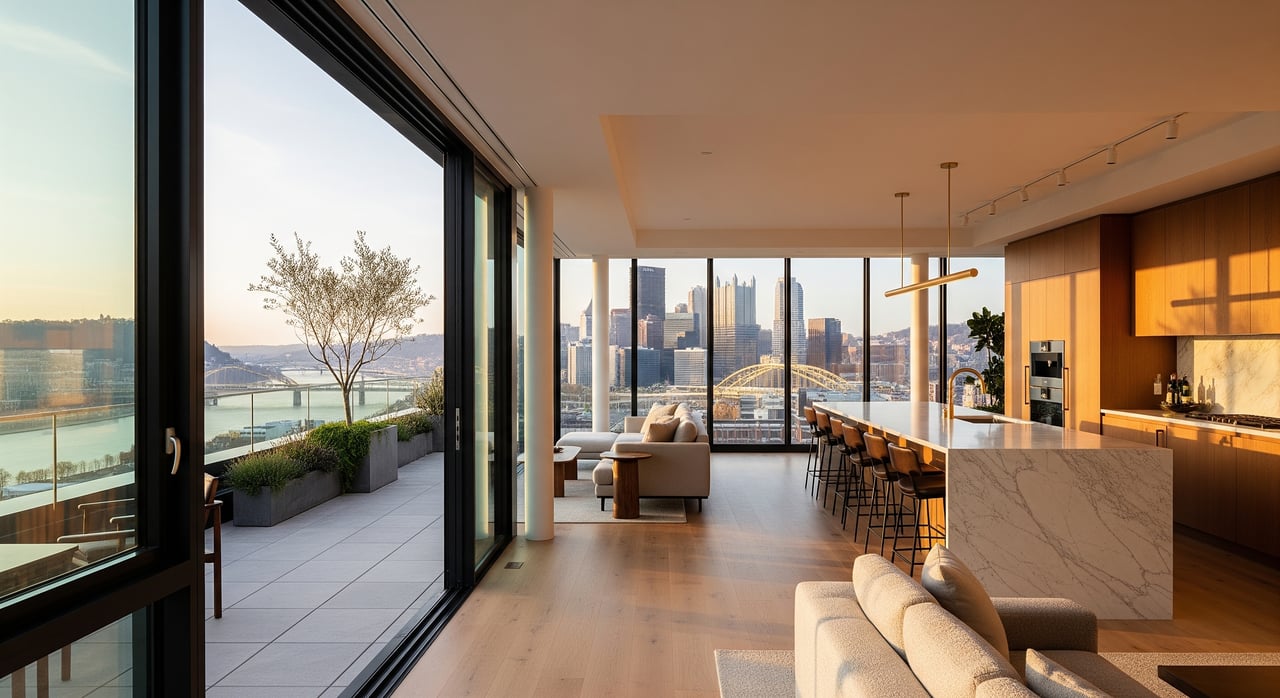
Higher ceilings and large windows help homes feel larger and brighter. Floor-to-ceiling glazing, where practical, is a differentiator. If your site offers river or bridge views, orient living spaces to capture them.
Private outdoor space
Balconies and terraces are high-utility features that command a premium. If budget allows, give most homes a usable outdoor area. Larger terraces and roof access can anchor upper-tier offerings.
Kitchens built for daily life
Design kitchens with an island or peninsula, ample cabinet storage, and space for small appliances. Prioritize durable, low-maintenance finishes that look good on day one and stand up to daily use.
Smart circulation and entry
Avoid long, wasted corridors. Create a small entry transition for coats, shoes, and packages. This “mud zone” helps buyers moving from single-family homes feel organized and at home.
Amenities buyers prioritize
Amenities should remove friction, support daily routines, and foster community without saddling owners with high monthly dues. Start with high-utility features, then add targeted lifestyle options.
Essentials that remove friction
- Secure package room with parcel lockers.
- Bike storage with a basic repair station.
- Dog-friendly features like a wash area or pet zone.
- Convenient trash and recycling with clear access.
Wellness and community
- A fitness room or a partnership with a nearby gym.
- A resident lounge with co-working space and at least one reservable conference room.
- A rooftop or landscaped terrace with seating and grills.
- A community room that supports small social events.
Security and management
Buyers value buildings that feel safe and well run. Provide controlled access, cameras in common areas, and well-lit entries and garage points. Pair this with on-site or responsive property management.
EV readiness and guest access
Include EV charging or the electrical conduit to add stations as adoption grows. Plan for visitor parking and a simple process for guests and vendors. A convenient rideshare drop-off point keeps the entrance clear.
Parking expectations by neighborhood
Parking remains a recurring priority. In many Pittsburgh neighborhoods, buyers expect at least one assigned space. In highly walkable or transit-rich locations, you can reduce the ratio if you add bike storage, EV readiness, and visitor spaces. Under-providing parking will narrow your buyer pool in more auto-oriented segments, so match your approach to your target location and audience.
Outdoor space and landscape that add value
Private balconies and terraces make individual homes more livable. At the building scale, a roof deck or courtyard with seating and green elements creates a social anchor. If your site connects to amenities like the Three Rivers Heritage Trail or offers riverfront access, highlight that in your design and marketing. Consider stormwater strategies and permeable landscaping to improve sustainability and address local drainage concerns.
Operating costs and sustainability buyers notice
Buyers compare monthly costs across options. Energy efficiency, comfort, and durability carry real weight, even when a formal label is not the main driver.
Energy efficiency that pays back
Use high-efficiency HVAC, LED lighting, and ENERGY STAR appliances. Pair these with a well-detailed thermal envelope to reduce heating and cooling loads. Lower utility consumption supports buyer budgets and your value story.
Healthy, comfortable interiors
Mechanical ventilation with heat recovery can maintain good indoor air quality in tighter buildings. When buyers feel fresh air and steady temperatures on tours, they perceive quality.
Water and stormwater strategies
Water-conserving fixtures reduce utility use. Green roofs and stormwater retention strategies help manage runoff, which is relevant where combined sewer systems and localized flooding occur.
Metering and HOA transparency
Individual metering for water and electric, where practical, gives owners control. If that is not feasible, provide transparent HOA budgeting that shows energy costs clearly. Predictability builds trust and speeds decision-making.
Site selection and approvals in Pittsburgh
Strong sites weave daily life, commute patterns, and neighborhood character into the product. Early due diligence smooths approvals and helps you align the building program with buyer expectations.
Walkability and daily needs
Favor sites with access to dining, grocery options, coffee, and essential services. Buyers will pay for a lifestyle that fits their routine.
Transit, employers, and unit strategy
Proximity to employment centers and major institutions should shape your unit mix and parking plan. Sites near UPMC, university campuses, and major office nodes may benefit from smaller, renter-friendly homes and flexible leasing strategies.
Historic review and design
Many sought-after neighborhoods include historic review processes that influence façades, setbacks, and window patterns. Early engagement with preservation boards helps you balance character with modern performance.
Floodplain and stormwater due diligence
Riverfront and low-lying areas can be flood-prone or subject to specific stormwater requirements. Use FEMA flood maps and local ordinances early to guide design, insurance planning, and costs.
Short-term rental rules and investor planning
Confirm current city and county rules for short-term rentals and tax registration. These policies affect investors, mixed-use programs, and building governance.
Accessibility and evolving codes
Plan for ADA access in common areas and keep an eye on evolving codes for energy performance and electrification. Future-ready design protects your investment and buyer satisfaction.
Budgeting, HOA dues, and financing
Financial clarity often determines whether a prospect becomes a buyer. Transparent budgets and accessible financing widen your pool and simplify closings.
HOA dues buyers accept
Buyers weigh monthly HOA fees against the services included. Model dues with conservative reserves and be clear about what is covered. Transparency builds confidence and reduces objections late in the process.
Lending and approvals
FHA and VA eligibility can expand your buyer base. For condo conversions and smaller associations, confirm documentation and standards early so buyers can access common loan products.
Insurance exposure
Evaluate flood and general hazard coverage needs based on your site. Insurance costs shape operating budgets and buyer perception, especially near water or on complex sites.
Preempt the key buyer questions
Buyers ask the same questions at tours and in follow-ups. Build answers into your marketing, spec sheets, and sales scripts.
- What are the monthly HOA fees and what do they cover?
- Is parking included or assigned, and are EV chargers available?
- What are the typical utility costs for the units?
- Are in-unit washers and dryers included or allowed?
- Is there reliable cell and internet service, and are fiber options available?
- What are the rules on pets, subletting, and short-term rentals?
- How secure is the building and who manages it?
- What warranties or workmanship guarantees come with the home?
- Are there storage options, bike and pet amenities, and package management?
- How is garbage and recycling handled?
Pittsburgh condo project checklist
Use this quick list during concept and schematic design to keep your product aligned with buyer demand.
- Define your target buyer segments. Emphasize 1- and 2-bedroom homes for most urban sites.
- Include in-unit laundry in most homes.
- Plan a dedicated workspace or an easy WFH setup.
- Maximize private outdoor access where the site and budget allow.
- Provide parcel lockers, bike storage with repair station, and a pet wash or pet-friendly design.
- Create a resident lounge with co-working and a reservable conference room.
- Add a fitness area or a nearby gym partnership and a rooftop or common outdoor area with seating and grills.
- Design secure entries, clear visitor access, and a visible management plan.
- Match parking to the neighborhood and buyer profile, include visitor spaces, and add EV charging or conduit.
- Include high-efficiency HVAC, a solid envelope, and ENERGY STAR appliances. Seek utility incentives where available as you budget.
- Integrate stormwater mitigation and consider green roofs in flood-prone settings.
- Offer metering transparency and clear HOA communications about energy-related costs.
- Model HOA fees with conservative reserves and clear inclusions.
- Confirm condo documents, FHA and VA pathways if desirable, and investor restrictions early.
- Engage zoning, planning, and historic review boards in schematic design.
- Prepare clear operating cost estimates. Highlight walkability, transit links, nearby institutions, and trail or river access.
- Use staged tours or virtual walkthroughs that show furniture layouts, including a home-office setup.
How New City Pittsburgh helps you deliver
You need a partner who understands buyer psychology, neighborhood context, and how to turn design decisions into sales momentum. New City Pittsburgh specializes in full-building condo sales and launch marketing, developer advisory, and design-forward urban brokerage across central neighborhoods and select suburbs. Our team combines local credibility with modern distribution to help you shape the right product, build a clean go-to-market plan, and accelerate pre-sales. When you are ready to align your next project with what Pittsburgh buyers want, we are here to help.
Ready to plan your next move? Connect with New City Pittsburgh to schedule a free consultation.
FAQs
What do Pittsburgh condo buyers expect in new buildings?
- Most buyers look for walkability, low-maintenance living, a defined work-from-home area, storage, parking, and access to outdoor space, all with predictable monthly costs.
Which unit types have the strongest demand in Pittsburgh?
- One- and two-bedroom homes serve the broadest pool, while studios and three-bedrooms are niche products best used to round out a targeted mix.
How much parking should a new Pittsburgh condo include?
- Many buyers expect at least one assigned space, but ratios can be lower in highly walkable or transit-rich areas when paired with visitor spaces, bike storage, and EV readiness.
Which amenities matter most to Pittsburgh condo buyers?
- High-utility features like parcel lockers, bike storage, pet amenities, secure access, a co-working lounge, a fitness option, and a usable rooftop or courtyard consistently rank high.
How important is energy efficiency to Pittsburgh buyers?
- Buyers care about comfort and total monthly costs, so high-efficiency systems, a strong building envelope, and clear metering or HOA transparency support both marketing and owner satisfaction.