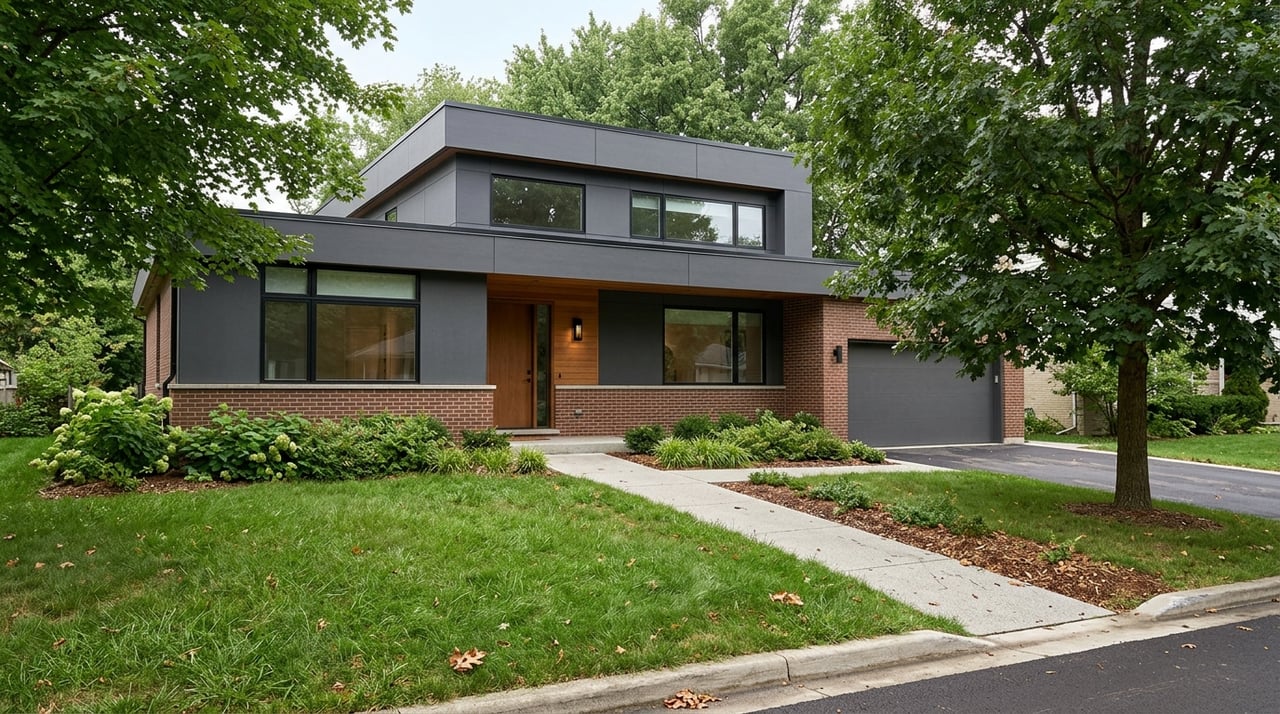
Are you outgrowing your current home but not sure what kind of daily life you want next? That is often the real question for move-up buyers looking at O’Hara and nearby communities. In this part of Allegheny County, the choice is less about picking a “better” suburb and more about choosing the setting that fits your routine, space needs, and priorities. Let’s dive in.
What move-up buyers are really choosing
If you are comparing O’Hara, Fox Chapel, Aspinwall, and nearby Pittsburgh neighborhoods, you are usually comparing four different lifestyle patterns.
O’Hara tends to sit in the middle. Fox Chapel leans toward more land and privacy. Aspinwall offers a compact borough feel with more neighborhood activity and parking management. Pittsburgh neighborhoods usually provide the widest mix of housing types and the strongest walk, bike, and transit access, often with less yard space.
That framing matters because your next move is not just about square footage. It is also about how you want to spend your time, how much outdoor space you want to maintain, and how connected you want to feel to nearby amenities.
Why O’Hara feels like the middle ground
For many move-up buyers, O’Hara works because it balances space with practicality. The township’s comprehensive plan describes many of its neighborhoods as conventional single-family homes on cul-de-sacs, with residential zoning that supports a low-intensity pattern.
That often translates into the kind of suburban setup many buyers picture when they are ready for more room. You may find more house and yard than you would in a compact borough or city neighborhood, without stepping fully into the larger-lot expectations that define Fox Chapel.
O’Hara also has a meaningful park system that supports an outdoor lifestyle. Township Community Park includes shelters, ballfields, tennis courts, playgrounds, a sand volleyball court, hiking trails, a pond, and a 7/10-mile loop trail. Meadow Park adds another large developed recreation area.
For a move-up buyer, that combination can feel like a practical upgrade. You gain breathing room at home while still having access to organized outdoor amenities close by.
O’Hara at a glance
- Primarily conventional single-family neighborhoods
- Low-intensity residential pattern reinforced by zoning
- More than 600 acres of undeveloped residential land in R-2 noted in the comprehensive plan
- Community parks with trails, courts, fields, and playgrounds
- Good fit if you want more space without moving to a very low-density setting
When Fox Chapel makes more sense
Fox Chapel is the most land-oriented option in this group. The borough describes itself as entirely residential except for churches, private clubs, and schools, and its zoning classifications set large minimum lot sizes ranging from one acre to three acres in several districts.
That creates a very different feel from O’Hara. Larger setbacks and lower-density residential patterns point to a more private, more secluded environment where land and separation between homes play a much bigger role in the overall experience.
Fox Chapel also preserves substantial open space. The borough says it owns more than 300 acres of parkland, and its trail system extends for more than four miles from the southern border near O’Hara Township to Beechwood Farms on the north.
If your move-up goal centers on privacy, outdoor surroundings, and a quieter residential setting, Fox Chapel may be the clearest match. In day-to-day terms, this choice is often less about nearby commercial convenience and more about committing to a larger-lot lifestyle connected by the regional road network.
Fox Chapel may fit if you want
- Larger lots and more separation between homes
- Deeper setbacks and a lower-density setting
- Significant preserved open space and trail access
- A home environment that prioritizes privacy over compact convenience
Why Aspinwall appeals to convenience-minded buyers
Aspinwall offers a different kind of move-up choice. The borough describes itself as having a dense suburban atmosphere with restaurants, bars, coffee shops, and parks, which gives it a more compact and active feel than O’Hara or Fox Chapel.
That compact character also shows up in how the borough manages parking. Residents receive parking stickers, and metered municipal parking exists on several streets, including Commercial Avenue, First Street, Brilliant Avenue, Loop Street, and Freeport Road. There is also merchant and overflow parking.
For buyers, that usually signals a tradeoff. You may get a more connected neighborhood experience and easier proximity to daily amenities, but you are also more likely to live with smaller lots and more structured parking rules.
Aspinwall’s park system adds to its appeal. Firemen’s Memorial Park includes a walking trail and views over Pittsburgh, the playground at Fifth Street and Field Avenue offers a pavilion, restrooms, and a splash pad, and Allegheny RiverTrail Park provides public access to parkland and multi-use trails along the river.
Aspinwall stands out for
- A compact borough layout
- Close access to restaurants, coffee shops, and parks
- More active public spaces and recreation options
- Parking systems that reflect a denser neighborhood pattern
What Pittsburgh neighborhoods offer instead
If you want to move up without leaving the city, nearby Pittsburgh neighborhoods deserve a serious look. The city recognizes a broad range of housing forms, including detached single-family homes, two-family homes, attached townhouses, and mixed-use buildings.
That flexibility gives buyers more choices in how they live. In Lawrenceville, the city notes that the east side includes large single-family brick homes, while areas closer to Downtown include row houses and newer townhomes. In Highland Park, the city describes tree-lined streets with Victorian, Tudor, and Colonial homes.
Transportation is also part of the equation. The city identifies Shadyside as an important east-west bicycle connector, and planning for future Bus Rapid Transit is intended to improve connections between Downtown, Oakland, the East End, and nearby neighborhoods.
For some move-up buyers, that mix is hard to beat. You may give up yard size, and street parking or permit considerations can become part of daily life, but you gain a wider set of housing options and stronger multimodal access.
Pittsburgh neighborhoods may be right if you value
- More housing-style variety
- Walkability and bike access
- Better transit connections in some areas
- Staying close to established city neighborhoods and street grids
How to compare your next move
When buyers feel stuck between these options, it helps to compare them through the lens of daily routine rather than labels. Ask yourself where you want your time, budget, and energy to go.
If you want a backyard, a more conventional single-family setting, and room to grow without going fully estate-style, O’Hara often hits a sweet spot. If privacy and acreage matter most, Fox Chapel pulls ahead. If you want a compact, amenity-rich borough feel, Aspinwall stands out. If you still prefer urban access and housing variety, Pittsburgh neighborhoods remain compelling.
Here is a simple way to think about it:
| Location | Best fit for | General tradeoff |
|---|---|---|
| O’Hara | Balanced suburban move-up | More space, less compact convenience |
| Fox Chapel | Privacy and larger lots | More land-focused, more road-dependent routine |
| Aspinwall | Compact borough living | Smaller lots and more managed parking |
| Pittsburgh neighborhoods | Urban access and housing variety | Less yard space, more street-parking considerations |
Budgeting by lifestyle, not just house size
For move-up buyers, budget is rarely only about the house itself. Land-use patterns suggest a broader logic across these communities.
Fox Chapel is generally the most land-heavy choice in this comparison. O’Hara sits in the middle. Aspinwall and nearby Pittsburgh neighborhoods tend to shift more of the value equation toward location, convenience, and housing form rather than acreage.
That does not replace a property-by-property analysis, but it is a useful planning tool. If you know whether you are prioritizing land, convenience, or flexibility in housing style, you can narrow the field much faster.
A smart way to choose between O’Hara and nearby suburbs
The best move-up decision usually starts with clarity about what you want your next chapter to feel like. Do you picture a quieter lot with more separation from neighbors, a practical suburban upgrade with parks nearby, a compact borough lifestyle, or a city home that keeps you connected to walkable streets and transit options?
Once you answer that, the shortlist often becomes clearer. In this pocket of Allegheny County, O’Hara is not just “near” Fox Chapel or Aspinwall. It is its own middle-ground choice, and that can be exactly what many buyers need.
If you are weighing O’Hara against nearby suburbs or city neighborhoods, New City Pittsburgh can help you compare the tradeoffs and find the fit that matches how you actually want to live.
FAQs
What makes O’Hara a good fit for move-up buyers?
- O’Hara offers a middle-ground suburban pattern with conventional single-family neighborhoods, more house and yard than a compact borough or many city locations, and access to parks and trails.
How is Fox Chapel different from O’Hara for homebuyers?
- Fox Chapel is more focused on larger lots, deeper setbacks, privacy, and open space, while O’Hara is generally a more balanced suburban option.
Why do some move-up buyers choose Aspinwall over O’Hara?
- Aspinwall appeals to buyers who want a compact borough feel with restaurants, coffee shops, parks, and a more convenience-oriented daily routine.
What do Pittsburgh neighborhoods offer move-up buyers?
- Nearby Pittsburgh neighborhoods offer the widest range of housing forms along with stronger walk, bike, and transit access, often in exchange for less yard space and more parking considerations.
How should you compare O’Hara, Fox Chapel, Aspinwall, and Pittsburgh neighborhoods?
- Focus on your daily-life priorities, including space, privacy, outdoor amenities, convenience, housing type, and how much you value walkability or driving access.